

How to Paint Wildflowers With Acrylic Paint: A Step-by-Step Guide
Key Takeaways
Blend a mid-to-light green gradient background with a large brush before adding detail.
Let the background dry, then flick small-brush strokes upward to layer varied grass blades.
Dot white, yellow, and lavender clusters together to create layered daisy-like wildflower groups.
Paint light pink rounded petal clusters with tiny red center accents for added depth.
Finish with thinned paint splatters in multiple colors, tapping the brush handle for texture.
Gather Your Materials Before You Start
Before you dab a single brushstroke, set up your workspace so you can paint without interruptions. Grab a stretched canvas board—A4 to A3 works well for beginners. Cover your palette with cling film to keep your paints wet between sessions.
Pick three brushes: a large flat for base washes, a medium one for shapes, and a small round or liner for grass blades, flower dots, and fine details.
Set out acrylic paints in white, black, blue, red, and yellow. These five colors mix into greens, purples, pinks, and light tints. Keep water and kitchen roll close by for cleaning and thinning.
Reserve space on your palette for mixing, and keep colors separated under cling film. Test mixes on scrap paper first. Keep a drink nearby, and relax.
Blend a Soft Green Background First
With your materials ready, start painting. Mix a mid-green on your palette using blue and yellow. Load your large brush and cover the bottom half of the canvas with even horizontal strokes. This sets the base color for your background.
Next, add white to the leftover green to create a lighter shade. Apply it to the top half of the canvas to create a natural sky-to-ground gradient.
Rinse your brush and leave it slightly wet. Blend the seam between the two greens with gentle back-and-forth strokes until the shift looks smooth. Repeat this process in thin layers while the paint stays damp.
Keep your palette covered with cling film between mixes to maintain consistent color.
Paint Grass Blades With a Small Brush
Once your background dries, switch to a small brush and mix a darker green by adding a touch of blue to your base color. Keep your brush fairly dry—wipe off excess water on a piece of kitchen roll first. This keeps your strokes crisp and controlled.
Use upward, flicking motions to paint each blade. Vary the length and pressure so they taper to a fine point. Angle some blades left, some right, and let a few stand upright. This mix creates a natural, random look.
For extra depth, thin a little black into your green and add a few shadow blades near the base. Use this sparingly.
Re-dip your brush between groups to keep pigment consistent. Don’t overcrowd the area—step back often and check that the grass looks natural from a distance.
Layer Wildflower Clusters in Yellow, White, and Purple
Grab a clean small brush and start dotting your white flower clusters. Apply tiny round dots in groups of four to six, then add a small yellow center to each one. This simple touch turns plain dots into daisies.
For larger daisies that need more defined petals, learn how to paint daisies without losing the detail in white petals, including how to build shadows and layer white highlights.
Next, mix light yellow by blending white into yellow. Layer these dots among your whites, then add a few pure yellow dots on top for contrast and focal points.
Now create purple clusters. Mix blue and red with a touch of white for a lavender shade. Dab vertical or rounded clusters, then highlight the top edges with lighter purple.
Vary your clusters’ size and density. Use tighter, darker clusters in shadows, and looser, lighter ones in brighter areas to build depth.
Add Pink Blooms and Splatter for Final Detail
After building up your white, yellow, and purple clusters, add a soft pink touch. Mix a light pink using about one part red to six parts white. Use your small brush to paint rounded petal clusters across the canvas. Add tiny red accents, about 1–2 mm, at the petal centers for depth.
Next, thin some pink paint with a drop of water until it feels like whole milk. Load your small brush and hold it in your non-dominant hand. Tap the handle with a second brush, 15–30 cm above the canvas, to create fine droplets. Practice once off-canvas first.
Repeat this splatter technique with yellow, white, and purple, tapping each color 2–3 times in different spots.
Frequently Asked Questions
How Do I Paint Flowers?
Block in a green-and-sky background first. Then use a small round brush to dab white, yellow, pink, and purple strokes for blooms. Add darker shadows, then white highlights, keeping your marks loose and varied.
What Are Common Mistakes in Acrylic Painting?
You often overwork wet paint, use too much water, skip cleaning your brush, or grab the wrong brush size for details. You also add too many strokes. Work quickly, keep brushes clean, and use less for better results.
How to Color With Acrylic Paint?
Build colors by layering dark to light. Block in midtones first, add black for shadows, then mix in white for highlights. Mix your own greens and purples, and test shades on scrap paper first.
Can You Provide an Easy Acrylic Painting Tutorial for Beginners?
Start by painting a graduated green background. Add grass with upward strokes, then layer on flowers using dots of white, yellow, purple, and pink. Finish with splatters and tiny highlights for charm.
In Conclusion
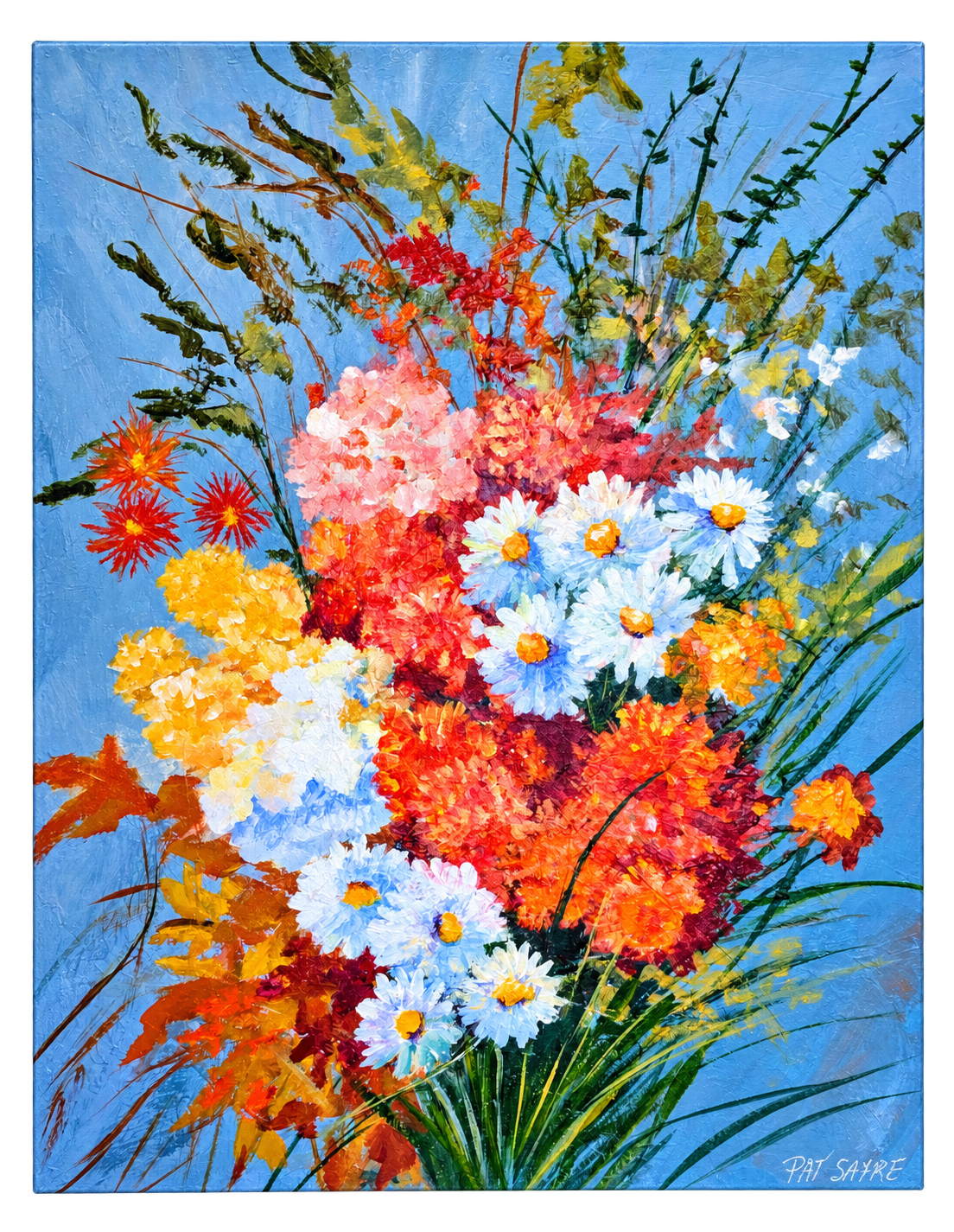
You’ve just learned how easy it is to paint wildflowers with acrylics. You started with a soft green background, added grass blades, then layered in yellow, white, and purple blooms. You finished with pink flowers and a fun splatter effect.
Don’t worry if your first try isn’t perfect. Painting takes practice. Grab your brush, pick your colors, and try again. You’ll get better with each new piece you create.